Your Ultimate Paid Search Blog: 30-Day Plan

You're staring at a pile of tabs, a paused Google Ads campaign, and a question that keeps coming back, what should a solid paid search blog teach you this month? Maybe you've already read the basic setup guides. Maybe you know the keywords, the ad copy, the landing page checklist, and still feel like the issues are slipping past the usual advice. That's because paid search in Ireland isn't just about launching ads, it's about proving value in a market where digital advertising reached €693 million in 2023 and continued rising, while search remained one of the core spend categories measured in that market, according to the IAB Ireland and Google-backed Online Adspend study cited in this paid search data roundup.
The best paid search blogs do more than repeat platform basics. They help you decide where to spend, how to read performance signals, and when search is carrying demand that other channels already created. That matters in Ireland, where internet use is embedded in daily life, and where SMEs still need practical guidance on measurement, local targeting, and conversion quality, not just keyword theory.
Table of Contents
1. Services - Paid Search - Why this stands out for scaling businesses - What to look for before you hire
2. Google Ads & Commerce Blog (Official) - Best use cases for the official feed
3. Microsoft Advertising Blog (Official) - Why it matters for Irish advertisers
4. Search Engine Land – PPC - Why practitioners keep it bookmarked
7. Wolfgang Digital – Blog & Insights - What makes the local angle useful
1. Services - Paid Search
A strong starting point for Irish advertisers is a service page that connects strategy to execution, and Scéaled's Paid Search offering does that clearly. The positioning is straightforward, Google Ads and Microsoft Advertising are used to turn search intent into qualified leads and pipeline growth, with senior-led management rather than a hands-off setup. That matters in a market where Google Ads CPC rose 11.4% year on year and average paid-search ROAS sat at 4.1:1, with retail at 5.3:1 and healthcare at 3.8:1, so wasted clicks get expensive fast, as noted in this paid search statistics summary.
Why this stands out for scaling businesses
Scéaled's approach is useful because it ties campaign structure, creative, bidding, audience targeting, landing-page optimisation, conversion testing, and measurement into one workflow. That's the right instinct for Irish SMEs and mid-market teams that need more than traffic. If the ads are generating clicks but the site leaks leads, the campaign still underperforms.
Practical rule: if a paid search partner can't explain how clicks become qualified enquiries, you're probably buying activity, not outcomes.
The service also fits the life problem many marketers face. You can build a technically clean account and still lose money if the landing page doesn't answer the query quickly enough or the sales team can't qualify the leads. Scéaled's connected approach, linking paid search with SEO, paid social, CRO, and AI-driven automation, is designed for that exact gap.
What to look for before you hire
Senior platform experience: former Google growth marketers usually bring sharper judgment on account structure, query intent, and bid management.
Conversion-first thinking: look for landing-page testing and measurement, not just ad creation.
Irish market context: Dublin and national targeting behave differently from broad, global advice.
Automation with purpose: AI should remove repetitive work, not hide poor decisions.
The main limitation is simple, this is a strategic partner model, so it won't be the cheapest route. But for teams that care about qualified demand and pipeline quality, that trade-off is often the right one.
2. Google Ads & Commerce Blog (Official)
Google's official Ads and Commerce blog is the place to check when you need the platform's own explanation of a change, not a third-party summary. Its strength is clarity. If Google changes bidding, budgets, ad formats, or policy guidance, the rollout context tends to be easiest to verify. For anyone managing search professionally, that kind of first-party detail is hard to replace.
The page also works well alongside Scéaled's Google Ads guidance, because the official blog tells you what changed, while a practitioner-led service explains what it means inside a live account. That split matters when platform updates affect how you structure campaigns or judge performance.
Best use cases for the official feed
Feature launches: useful when you need to understand a new ad format or product update quickly.
Policy changes: valuable for compliance and account hygiene.
AI-driven search updates: helpful when Google changes how ads appear alongside new search experiences.
Rollout timing: important when you need to know whether something is available now or still expanding.
The trade-off is obvious. The blog is authoritative, but it's still a platform publication, so it won't often tell you what fails in day-to-day optimisation. You'll get the rules, the mechanics, and the intended use case, but not much criticism from the field.
For an Irish team, that's still worth keeping in the weekly reading stack. Search spend in Ireland sits inside a fast-growing digital economy, and official guidance helps you avoid making structural mistakes while the market keeps moving. If you're balancing limited budget, changing ad formats, and a need for cleaner measurement, platform-native updates give you the facts before the hype spreads.
3. Microsoft Advertising Blog (Official)
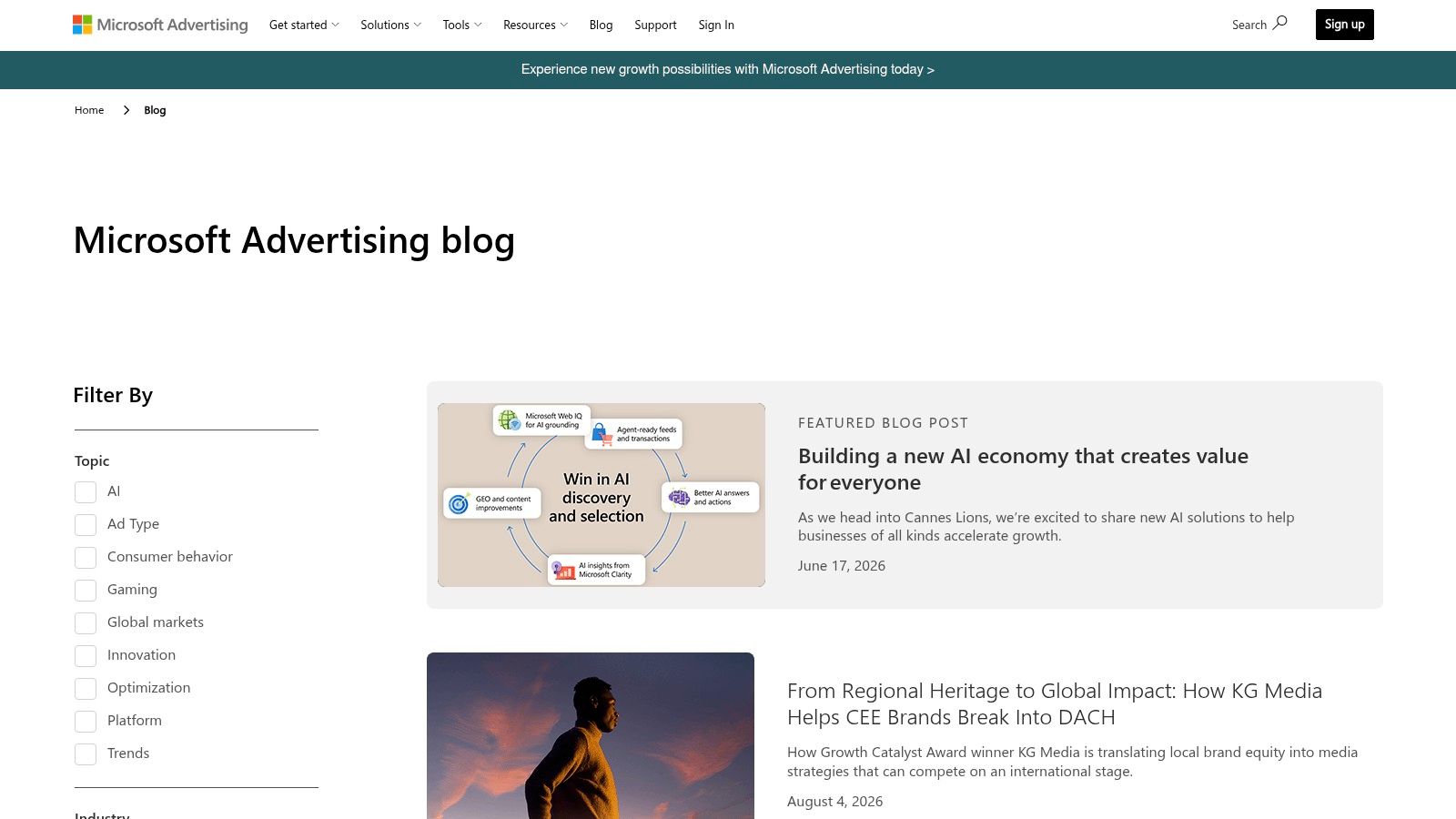
Microsoft's official advertising blog is a smart read if you want to diversify beyond Google without guessing how the other platform thinks. It covers product announcements, roadmap context, partner stories, AI in search, and guidance on Microsoft's search inventory. That mix is especially useful when you're deciding whether Microsoft Ads deserves a stronger role in your mix, rather than treating it as an afterthought.
Why it matters for Irish advertisers
Microsoft Advertising can be practical when you want to test a second engine, manage brand protection, or capture searchers who behave differently from Google users. The blog often reflects that broader strategic angle. It's also a useful companion to Microsoft Ads Management if your team needs a clearer structure for campaign setup, targeting, ad copy, and conversion tracking.
When Google gets most of the attention, Microsoft often gets treated like a backup plan. That's a mistake for teams that want a better read on multi-engine search demand.
The blog's AI coverage is another reason to keep it in rotation. Paid search is no longer just about bid adjustments and keywords, it's also about how placements, search experiences, and automation affect user behaviour. Microsoft tends to discuss those shifts in a practical, product-facing way.
The limitation is volume. There are fewer posts than in Google's ecosystem, so you won't get the same constant stream of updates. Even so, the official Microsoft blog helps advertisers think beyond a single platform, which is useful in Ireland where brands often need to stretch budgets carefully and capture demand wherever it appears.
4. Search Engine Land – PPC
Search Engine Land's PPC section is the kind of publication you open when the industry changes quickly and you want interpretation, not just a press release. It combines news, expert columns, and how-to articles across Google Ads, Microsoft Advertising, and retail media. The value is in the mix. You can skim a headline, then dig into practitioner commentary from people who've spent years inside the channel.
The section works best for teams that already know the basics and need sharper context on policy shifts, auction changes, and platform behaviour. It's also a helpful companion to paid search strategy guidance when you want to compare broad industry opinion with a more applied planning approach.
Why practitioners keep it bookmarked
Search Engine Land is strongest when a fast-moving change needs a human read. One contributor may explain how a new format works, while another will tell you what accounts are likely to break first. That range can be valuable, but it also means you need to read critically and compare viewpoints.
News speed: useful when platform updates start affecting live accounts.
Expert columns: helpful for getting beyond official messaging.
Cross-platform coverage: good for teams managing more than one engine.
Strategic interpretation: useful when you need a reasoned view, not just mechanics.
The downside is consistency. Some pieces are deep and tactical, others are lighter. If you're leading a small Irish marketing team, that means you'll want to choose articles carefully rather than reading everything in order. Even then, the publication is one of the better places to spot shifts in paid search thinking before they become common practice.
5. Search Engine Journal – Paid Media
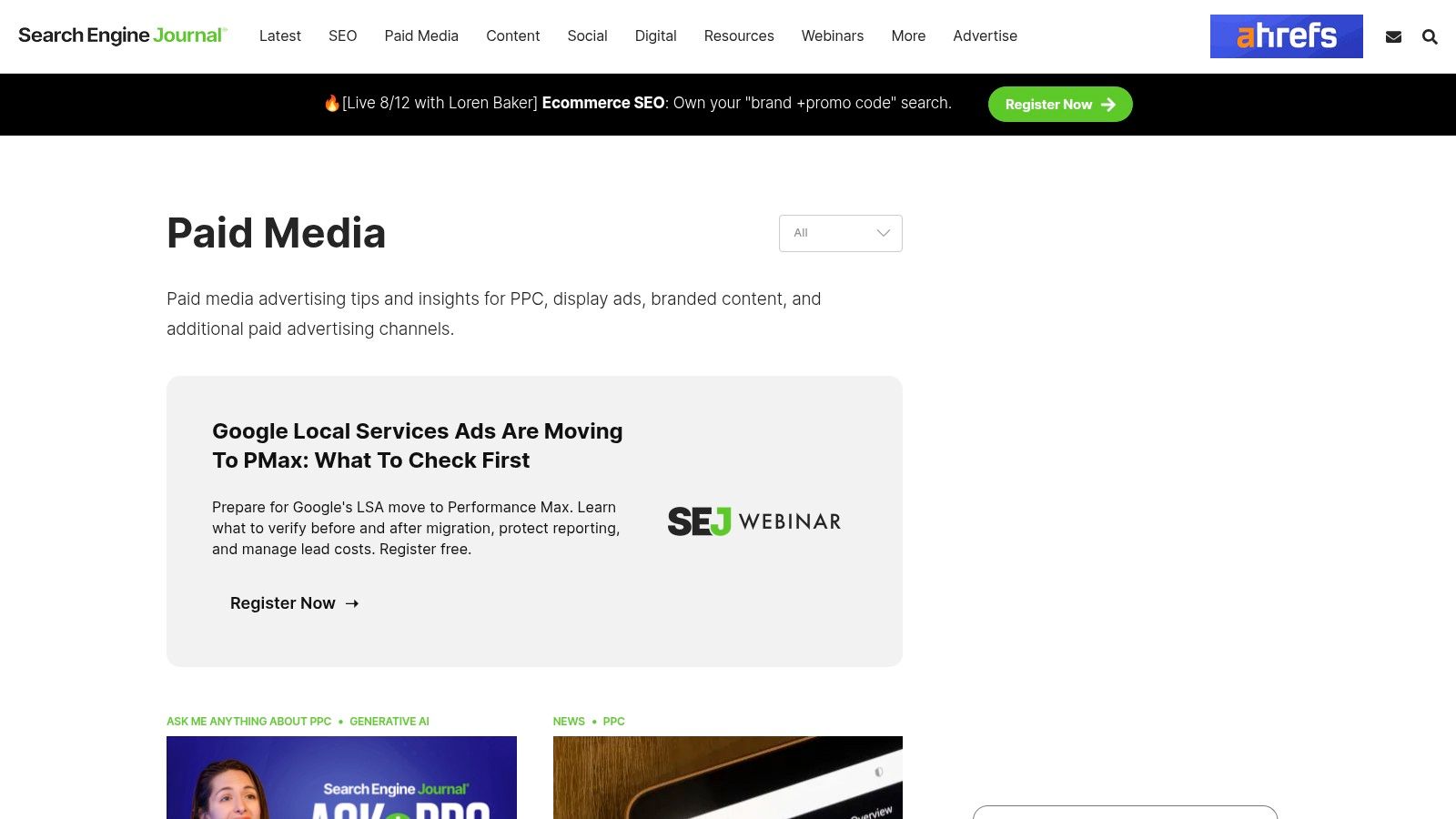
Search Engine Journal's Paid Media section tends to be practical, example-led, and easy to apply. It covers Google, Microsoft, YouTube, and retail media, with a lot of step-by-step material on audits, creative testing, and integrated search. That makes it useful for in-house teams and agencies that need repeatable actions rather than broad theory.
The tone is usually direct. You'll often find posts built around a workflow, a template, or a specific problem that a manager can solve the same day. For readers trying to move from “we run ads” to “we know where the leaks are,” that matters.
Where it helps most
Audits: a good fit when an account feels busy but weak.
Creative testing: useful when ad fatigue or weak messaging is dragging performance.
Cross-channel planning: helpful when search and paid social need to support each other.
Template-driven work: useful for smaller teams that need structure.
It's also one of the easier publications to turn into team discussion. A junior marketer can read a post and pull out actions. A senior manager can scan it for process ideas. That broad usefulness is a strength.
The limitation is that quality can vary. Because it has many contributors, some articles overlap or repeat familiar advice. Still, if you want a source that helps you move from concept to action, it earns its place in a paid search blog reading list, especially for teams working on conversion issues, ad testing, and practical optimisation.
6. Optmyzr Blog
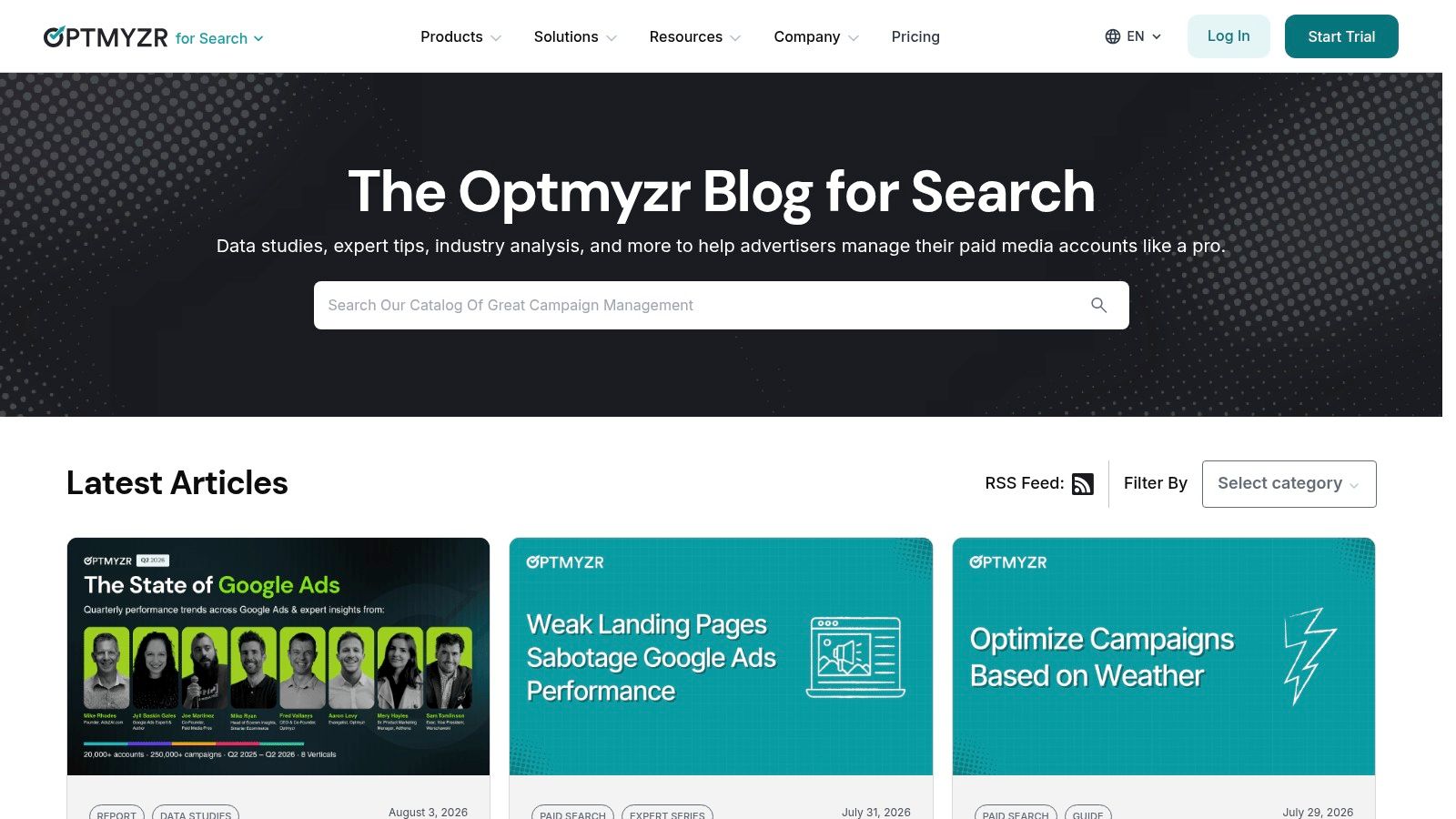
Optmyzr's blog is built for people who already live inside PPC accounts. It goes deep on diagnostics, automation, budgets, guardrails, and multi-engine workflows, which makes it more useful for senior practitioners than for beginners. The writing usually assumes you understand the basics and want to improve the operating system around your campaigns.
Why advanced teams lean on it
The blog is especially good when an account starts to feel too manual. It often discusses how to spot issues faster, which workflows to automate, and how to keep automation from making decisions you wouldn't make yourself. That's a strong fit for agencies and in-house specialists who are balancing more than one account at a time.
Important distinction: automation should speed up better decisions, not replace them.
Its strength is operational thinking. Instead of staying at the level of “improve the ad copy,” the content often asks how you diagnose a broken query mix, how you triage budget pressure, or how you keep reporting readable for stakeholders. That makes it valuable where search journeys are longer and attribution is harder to trust.
The trade-off is that some posts lean toward Optmyzr's own tools, so you need to separate the framework from the product pitch. Even so, the underlying thinking is solid. For teams that want to build a more disciplined paid search process, this is one of the most useful deep-dive resources available.
7. Wolfgang Digital – Blog & Insights
Wolfgang Digital is one of the most relevant reads for Irish advertisers because the perspective is local. The blog and insights content brings in Ireland and EMEA context, case studies, award write-ups, and integrated performance marketing, which makes it easier to translate advice into a market like Dublin, Cork, Galway, or broader national campaigns. That local lens matters because generic international PPC advice often ignores how thin some Irish categories can be.
The practical value shows up in the examples. You're more likely to see thinking shaped by Irish market realities, not just abstract platform rules. For SMEs and mid-market brands, that can be the difference between advice that sounds smart and advice that fits the territory.
What makes the local angle useful
Regional context: helpful when Dublin isn't the whole market.
Integrated marketing view: useful when search, analytics, and paid social need to work together.
Case-led learning: easier to apply when you want examples, not theory.
Irish market familiarity: useful for firms that need local judgment, not imported assumptions.
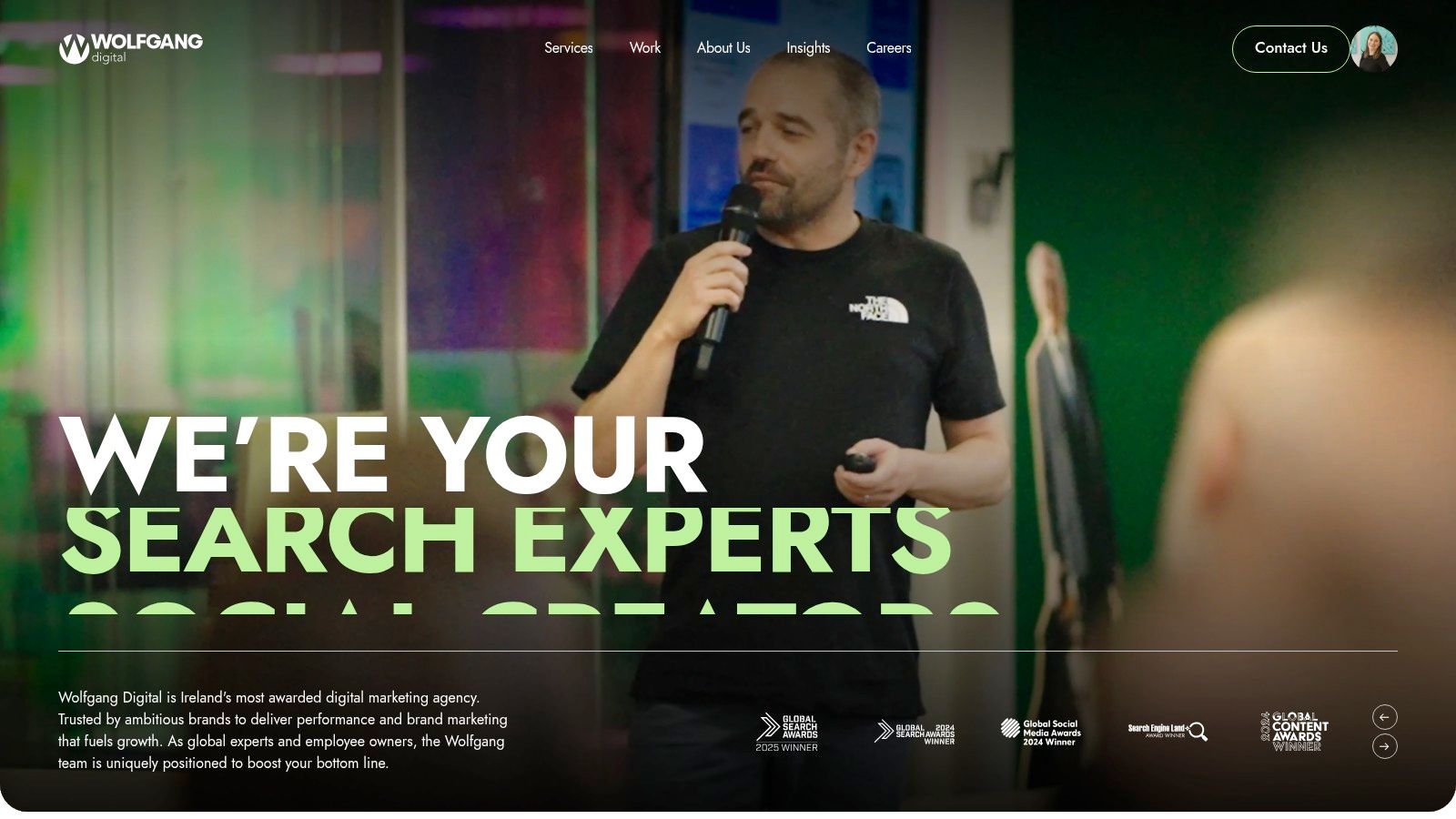
The blog's pace is slower than large global publications, and some posts are naturally more promotional, especially around awards. Even so, it is one of the few places where Irish advertisers can find paid search thinking grounded in the market they sell into. If your team is trying to decide how to split spend across counties, campaigns, and channels, that local context is worth a lot.
Top 7 Paid Search Blogs Comparison
Item | Complexity (🔄) | Resources & Speed (⚡) | Expected outcomes (📊⭐) | Ideal use cases (💡) | Key advantages (⭐) |
|---|---|---|---|---|---|
Services - Paid Search (Scéaled) | High, full-service strategy + execution | Medium–High resources; faster ROI when engaged | Predictable, sales-ready leads and improved ROI | Scaling B2B/B2C companies seeking hands‑on paid search + CRO | Senior ex-Google team; integrated paid search + SEO/social + AI automation |
Google Ads & Commerce Blog (Official) | Low, informational source | Minimal resources; fastest official updates | Timely, authoritative product & policy awareness | Practitioners needing first-to-know platform changes | Direct from Google product & policy teams; high signal-to-noise |
Microsoft Advertising Blog (Official) | Low, informational | Minimal resources; focused Microsoft cadence | Guidance on Bing inventory, Copilot/AI placements | Advertisers diversifying beyond Google or using Microsoft Search | Authoritative Microsoft updates and AI/search guidance |
Search Engine Land – PPC | Low–Medium, news + expert commentary | Moderate; rapid news interpretation | Broad cross-platform insights and practitioner perspectives | Teams needing fast analysis of policy/auction changes | Editorial independence; expert columnist analysis |
Search Engine Journal – Paid Media | Low–Medium, practical how‑tos | Moderate; frequent tactical content | Actionable playbooks, templates, and audit guidance | In‑house teams/agencies needing repeatable PPC processes | Example‑led, step‑by‑step tactical articles and templates |
Optmyzr Blog | Medium–High, deep practitioner focus | Moderate resources; requires PPC expertise | Operational frameworks for diagnostics, automation, measurement | Senior practitioners/agencies building workflows & automation | In‑depth analyses, automation/measurement best practices |
Wolfgang Digital – Blog & Insights | Low–Medium, agency insights & case studies | Moderate; local/regional focus | EMEA/Irish benchmarks, practical local case studies | Irish SMEs and mid‑market brands needing local market context | Local EMEA relevance; proven agency case studies and benchmarks |
Final Thoughts
A good paid search blog does three jobs at once. It teaches you how the platforms work, it helps you interpret performance, and it gives you a way to connect search spend to real commercial outcomes. In Ireland, that last part matters more than ever because search sits inside a fast-growing digital advertising market, but the channel is also facing higher click costs, noisier attribution, and more pressure to prove that every euro is doing useful work.
The best resources on this list solve different problems. Google and Microsoft's official blogs keep you close to product and policy changes. Search Engine Land and Search Engine Journal help you translate industry noise into action. Optmyzr pushes deeper into measurement and workflow design. Wolfgang Digital brings the local context that generic global advice often misses. Together, they give you a more complete view of what paid search really looks like when the brief is not just traffic, but qualified demand.
The biggest lesson is that strong search marketing now depends on more than keywords and bids. Irish advertisers need better landing pages, cleaner measurement, smarter geographic planning, and a willingness to test what really creates incremental demand. The data points in this piece point in the same direction, paid search is still growing, but the teams that win are the ones that treat it as a connected commercial system rather than a set of isolated tactics.
If you're reviewing your own reading list today, start by asking a simple question, does this source help me make better decisions, or does it just keep me busy? That filter will save time and sharpen your strategy. It'll also help you spot the difference between content that sounds useful and content that improves performance.
If you want a paid search partner that connects strategy, execution, and measurement, Scéaled plans and runs Google Ads and Microsoft Advertising with a strong focus on qualified leads and pipeline growth. Visit Scéaled to see how a Dublin-based team led by former Google marketers can help turn search demand into clearer commercial results.
Comments